
Moving to the UAE opens the door to exciting opportunities, tax-free income, and a world-class lifestyle. Whether you’re relocating to Dubai’s dynamic skyline or Abu Dhabi’s cultural richness, this guide will walk you through everything you need to know. From obtaining your visa and finding a job to setting up a home and integrating into the local culture, we cover it all step by step.
Table of Contents
Why Move to the UAE?
The UAE consistently ranks as one of the top destinations for expatriates due to:
- Tax-Free Salaries – Maximize your savings.
- Global Job Market – Multinational companies, government initiatives, and free zone opportunities.
- World-Class Infrastructure – From smart cities to efficient public services.
- Safe and Modern Lifestyle – Clean cities, low crime rates, and luxury amenities.
- Expat Community – Over 88% of UAE’s population are expats from more than 200 countries.
Whether you’re moving to the UAE for work, family, or investment, the country offers unmatched living standards and growth potential.
📋 Step-by-Step Guide: How to Move to the UAE
1. Secure a Job Offer or Investment Opportunity
- Work visa applicants must be sponsored by an employer.
- Investors can apply through company formation or property ownership.
- Freelancers can apply for special freelance permits in free zones like Dubai Media City or Abu Dhabi’s Creative Zone.
2. Prepare Essential Documents
Ensure you have:
- Passport (valid for at least 6 months)
- Offer letter or business license
- Academic and professional certificates (attested)
- Passport-size photos
- Marriage and birth certificates (if relocating with family)
- Police clearance (for certain visa types)
UAE Visa Types and Residency Options
| Visa Type | Who It’s For | Duration |
|---|---|---|
| Work Visa | Sponsored by UAE employer | 2–3 years |
| Investor Visa | Business owners or property investors | 5–10 years (renewable) |
| Family Visa | Spouses, children, and dependents | Linked to sponsor |
| Golden Visa | Investors, scientists, professionals | 10 years |
| Retirement Visa | Retirees meeting income criteria | 5 years (renewable) |
Tip: Apply through the ICP Smart Services portal or via an authorized typing center.
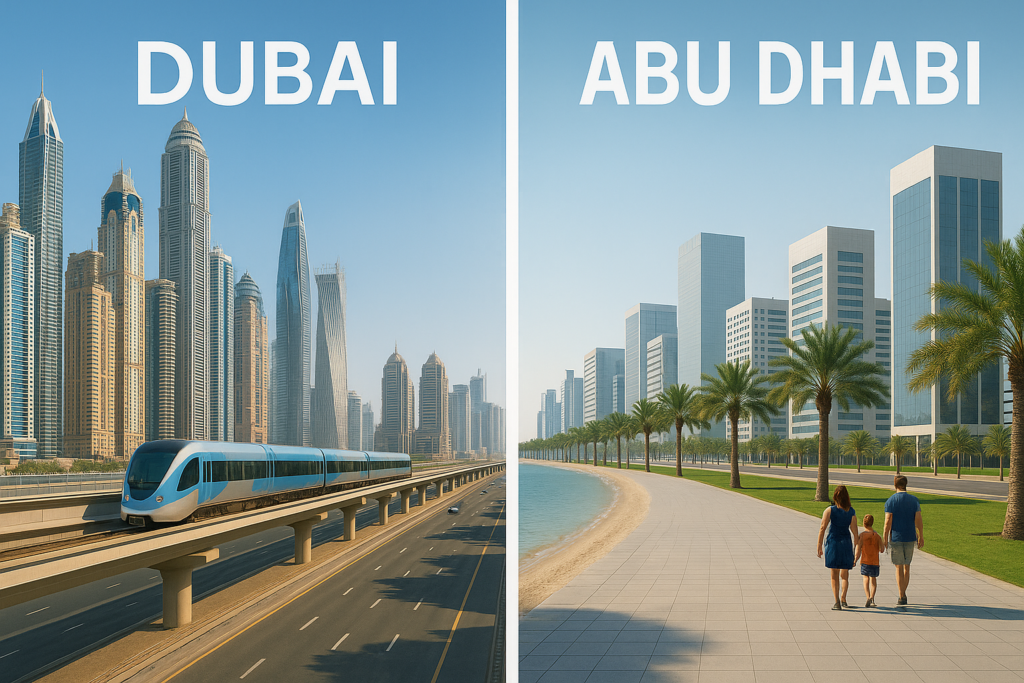
Dubai vs. Abu Dhabi: Where Should You Live?
| Feature | Dubai | Abu Dhabi |
|---|---|---|
| Vibe | Fast-paced, business-oriented | Relaxed, culturally rich |
| Popular Areas | Dubai Marina, Downtown, Jumeirah | Al Reem Island, Saadiyat, Khalifa City |
| Cost of Living | Higher in central zones | Slightly more affordable |
| Commute | Metro, taxis, Careem/Uber | Buses, taxis, limited metro |
| Family Life | Schools, malls, beaches, lots of expat communities | Quieter lifestyle, family-oriented spaces |
Housing and Accommodation
Understanding rental laws and contracts will help you avoid surprises after moving to the UAE.
Short-Term Rentals
- Platforms like Airbnb and Bayut offer flexible options.
- Ideal while you finalize long-term housing.
Long-Term Rentals
- Dubai: Popular districts include Downtown, JLT, and Dubai Hills.
- Abu Dhabi: Look into Al Raha Beach, Reem Island, and Al Khalidiyah.
- Rental contracts typically run for 12 months, often with 1–4 post-dated cheques.
Finding a Job in the UAE
If you’re moving to the UAE for work, ensure your job offer includes sponsorship, housing allowance, and healthcare benefits.
In-Demand Industries
- Dubai: Tech, tourism, logistics, finance
- Abu Dhabi: Oil & gas, education, government, renewable energy
Where to Search
- Bayt.com
- GulfTalent
- Naukrigulf
Be proactive. Networking through local events and professional groups can boost your chances.
Schools and Education for Expats
Families moving to the UAE will find a wide range of international schools that cater to expat communities.
School Curricula
- British: GEMS Education, Dubai College, Repton Abu Dhabi
- American: American School of Dubai, ACS Abu Dhabi
- IB: Dubai International Academy, Raha International School
Key Considerations
- Admissions often require early application (September–June academic year)
- School fees range from AED 15,000–100,000+ per year
Healthcare in the UAE
- Dubai: Dubai Healthcare City, Mediclinic, Aster
- Abu Dhabi: Cleveland Clinic, NMC, Burjeel
- Mandatory health insurance is required for expats.
- Employers often provide basic coverage. Top-ups are available for broader coverage.
Health insurance is mandatory for expats moving to the UAE, so compare plans based on your family’s needs.
Transportation and Driving
Public Transport
- Dubai: Metro, RTA buses, trams, taxis
- Abu Dhabi: Buses and taxis (metro under development)
Driving
- Convert your license if you’re from an approved country (UK, EU, US, etc.)
- A UAE driver’s license is required if staying long-term.
Ride-Hailing
- Uber and Careem are widely used in both cities.
Getting around after moving to the UAE is simple thanks to an efficient metro, bus, and taxi system in major cities.
Banking, Utilities & Setup
Opening a Bank Account
Required documents:
- Emirates ID
- Passport with residence visa
- Salary certificate or trade license
Popular banks include Emirates NBD, Mashreq, FAB, and ADCB.
Setting Up Utilities
- Dubai: DEWA for water/electricity
- Abu Dhabi: ADDC
Mobile/Internet providers:
- Etisalat
- Du
Monthly Living Costs Overview (Single Person)
| Category | Dubai (AED) | Abu Dhabi (AED) |
|---|---|---|
| Rent (1BR Apt) | 5,500–8,000 | 4,500–6,500 |
| Utilities | 500–800 | 450–700 |
| Groceries | 1,200–1,400 | 1,000–1,300 |
| Transportation | 300–600 | 250–500 |
| Leisure & Dining | 800–1,200 | 600–1,000 |
Culture, Customs & Integration
- Respect local traditions, especially during Ramadan.
- Dress modestly in malls, offices, and religious areas.
- Alcohol is permitted in licensed venues, not public.
- Learning basic Arabic helps in social settings and is appreciated.
Common Phrases:
- “As-salamu alaykum” – Hello
- “Shukran” – Thank you
Respecting Islamic customs and dress codes is essential when moving to the UAE, especially during holidays like Ramadan.
Safety & Legal Guidelines
- The UAE is one of the safest countries in the world.
- Emergency Number: 999
- Strict regulations on:
- Drugs (zero tolerance)
- Public conduct
- Online behavior (defamation, social media laws)
✅ UAE Relocation Checklist
- Receive job offer / establish business
- Apply for work or investor visa
- Obtain Emirates ID
- Secure accommodation
- Open bank account
- Enroll children in school (if applicable)
- Set up utilities, internet, insurance
- Familiarize yourself with laws and culture
🏁 Conclusion: Ready to Move to the UAE?
Moving to the UAE could be your best decision in 2025 offering stability, opportunity, and a modern expat lifestyle. From career growth to luxury living and a multicultural community, the UAE is a destination that offers both opportunity and comfort. With the right preparation, your move can be smooth and rewarding whether to Dubai’s skyline or Abu Dhabi’s serenity.
📞 Need help relocating?
360 Global Relocations offers visa services, housing assistance, school placement, and everything in between.
👉 Schedule Your Free Consultation